I still remember staring at that pixelated screen in Ratatouille, convinced the dish was impossibly complex. I delayed making it for years. The fear was real. What if I messed up the slices? What if it turned into a sad, watery mess?
Turns out, I was wrong.
This old-school French vegetable dish is shockingly simple. Once I finally stopped intimidating myself and started chopping, the magic happened. It isn’t about technique-heavy French cuisine. It’s about fresh summer produce. It’s about letting the ingredients speak for themselves. If you have access to good vegetables, you can make this. You’ll likely wow your guests. And honestly? You’ll probably surprise yourself.
Why This Summer Vegetable Dish Works
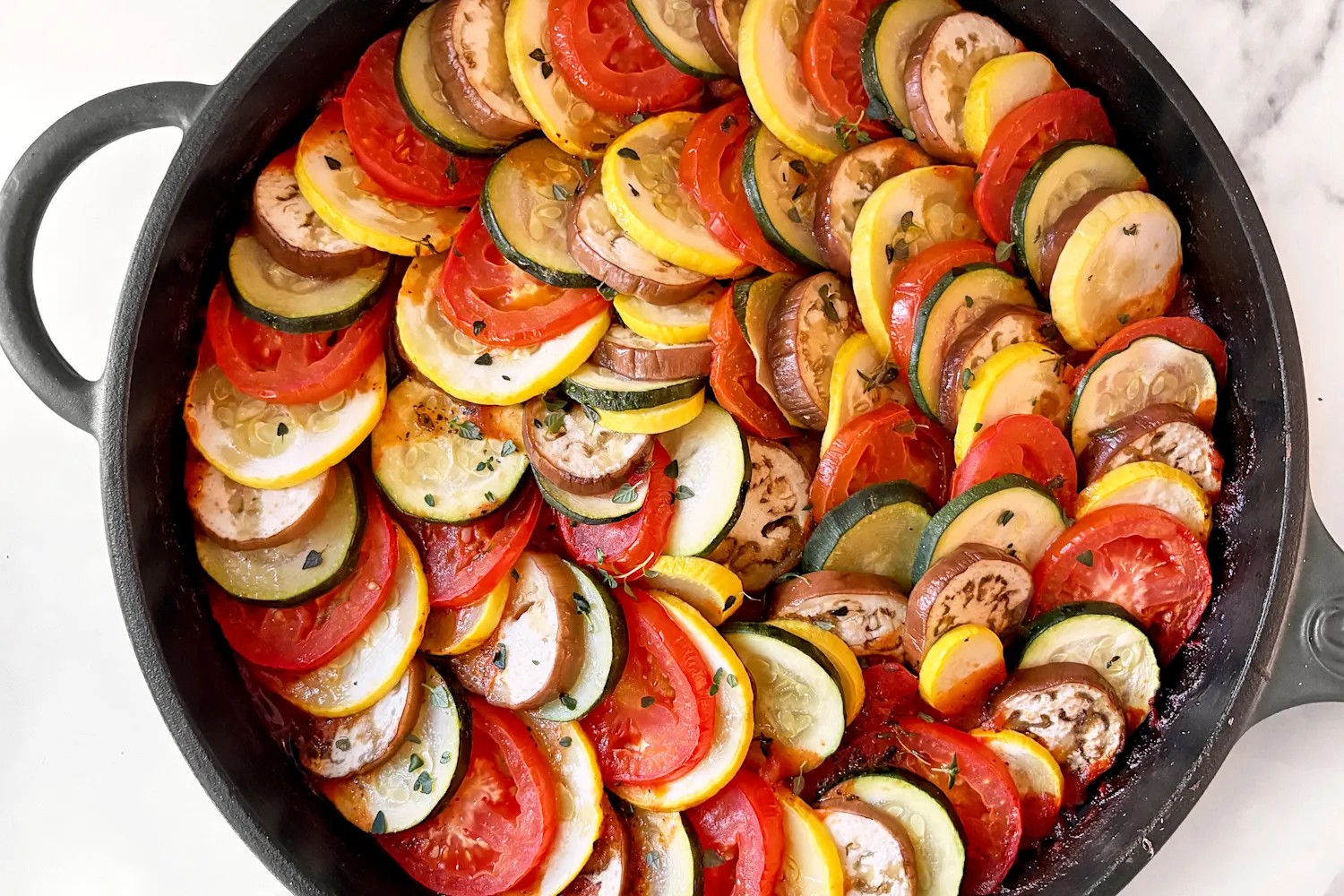
Ratatouille isn’t just movie props. It’s a genuine test of how good simple flavors can be when executed with a bit of patience. The visual is striking, sure. The concentric circles of color are a showstopper. But the taste is what sticks with you.
It tastes like a garden after rain. Fresh. Bright. The vegetables don’t turn to mush. They retain their structure while softening just enough to bite into. The sauce at the bottom—made from purée, red peppers, onions, and garlic—isn’t soupy. It’s concentrated. Thick enough to coat, light enough to not weigh you down. Add fresh herbs at the end, and you get a burst of sunshine in every spoonful.
It’s the best way to use up zucchini, squash, and eggplant when your local farmer’s market is overflowing.
How to Make Ratatouille Without the Stress
You don’t need a culinary degree. You just need a skillet and some sharp knives.
Slice the vegetables evenly.
This is the only “hard” part. Use a knife or a mandoline to slice zucchini, summer squash, eggplant (no need to peel it; the skin adds color and texture), and tomatoes into thin, uniform rounds. Uniformity is key here. It ensures even cooking. If some slices are thick and others thin, you’ll get mush alongside rock-hard bites. Not ideal.
Build the flavor base.
In a large skillet (preferably one with an oven-safe handle), sauté chopped onion and bell pepper. Wait until they soften. Add the herbs and garlic. Let them get fragrant. Then, pour in the tomato purée and a splash of red wine vinegar. Stir it all together until it forms a smooth, consistent paste. Spread this sauce evenly across the bottom of the pan. This prevents sticking and adds the foundational tomato flavor.
Arrange with care.
Here is where you play with geometry. Place the vegetable slices over the sauce in concentric circles. Start from the outside edge and work your way in. Alternate the colors: zucchini, eggplant, tomato. Be careful to leave tiny slivers of each vegetable showing between the layers. It creates that iconic striped look. It’s tedious? Maybe. Worth it? Absolutely.
Bake and rest.
Cover the skillet tightly with foil or a lid. Bake it in the oven. You want the vegetables to soften, not brown or burn. Keep an eye on them. When they’re tender, take the pan out. Let it rest for a few minutes. This step is non-negotiable. It lets the structure set so it doesn’t slide apart when you scoop. Top with fresh herbs like parsley or basil. Serve warm or at room temperature.
Tips for the Best Results
Prep ahead.
Slicing takes time. Slice your vegetables up to a day in advance. Store them in airtight containers in the refrigerator. You save hours during actual assembly.
Vinegar swap.
No red wine vinegar? No problem. Use sherry vinegar or even a high-quality balsamic instead. The acidity is necessary to cut through the richness of the tomatoes and oil. Don’t skip the acid.
The Verdict
This isn’t a recipe that demands perfection. It demands freshness. If your vegetables are wilted, start over. If they’re crisp and vibrant, you’re already halfway to dinner success. It’s a reminder that cooking doesn’t have to be complicated to be impressive. Sometimes, it’s just about arranging what you have nicely on a plate and letting the heat do its job.
You’ll find yourself making this all summer long. The leftovers taste better the next day anyway. The flavors meld. The sauce thickens. It’s worth saving a portion for lunch the following day.