


We live in a culture obsessed with calorie counting. Walk into any gym, scroll through social media, or pick up a magazine, and you will see endless lists of names like the Atkins, Cabbage Soup, or South Beach diets. These trends come and go, but the underlying struggle remains the same for millions. We want to know why weight gain happens so easily and, more importantly, how to actually stop it.
To understand the solution, we first have to look at the machine we are dealing with. Specifically, we need to address why maintaining a stable weight feels like such an uphill battle for most adults.
The Surprising Efficiency of Human Biology
Have you ever wondered why adding a few pounds seems to happen almost overnight after you turn 30? It is not just your willpower failing. It is because the human body is incredibly, almost frustratingly, efficient.
Your body does not require much energy to simply exist. This baseline energy expenditure is known as your basal metabolic rate. For most people, this burns roughly 12 calories per pound of body weight every day. Let’s look at the math for a 150-pound person:
150 pounds x 12 calories = 1,800 calories per day
That is it. That is all it takes to keep you alive while you sit on the couch. Those 1,800 calories fuel your heartbeat, regulate your breathing, keep your internal organs functioning, maintain your body temperature, and power your brain. If you are lighter or heavier, the number scales, but the efficiency remains constant.
Exercise Doesn’t Burn as Many Calories as You Think
Here is where the efficiency becomes even more apparent. We often overestimate how much exercise contributes to calorie deficits.
Consider a marathon. A runner covering 26.2 miles burns approximately 2,600 calories in total. That works out to about 100 calories per mile. You might think, “Wow, I ran five miles, I can have a huge meal.” But that meal likely exceeds the 500 calories you just burned.
Let’s compare this to a car to see just how efficient our biology is. A typical American car gets between 15 and 30 miles per gallon of gasoline. One gallon of gas contains about 31,000 calories. If humans could drink gasoline instead of eating hamburgers, a person could run 26 miles on just one-twelfth of a gallon of gas (about 0.3 liters).
This means the human body achieves more than 300 miles per gallon. If you put that human on a bicycle, efficiency jumps to over 1,000 miles per gallon.
We are biologically engineered to conserve energy. This extreme efficiency is the primary reason why gaining weight is so easy. It takes very little extra fuel to add mass to a system that is already optimized for survival.
Taking Calories In
Since our bodies are designed to hoard energy, the next step in understanding weight management is looking at what we put into the tank.
How Fast Food Calories Stack Up Against Daily Needs
We often think of 1,800 calories as a generous daily allowance, especially if we’re sitting at a desk or just going about our day without intense exercise. It feels like a lot of food. But when you look at what we actually put on our plates, that number evaporates fast.
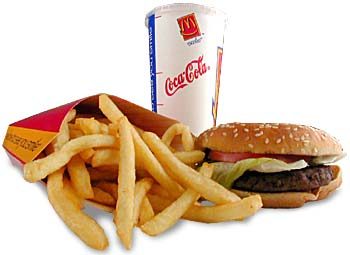
Take a trip to your local McDonald’s. You aren’t ordering a snack; you are ordering a day’s worth of fuel in one go. The Big Xtra meal sounds like a standard lunch, but let’s break down the math.
- The sandwich alone clocks in at 710 calories.
- A large order of french fries adds 540 calories.
- That large Coke? Another 310 calories.
Just for the main course and a drink, you’ve hit 1,560 calories. That is nearly your entire daily requirement before you’ve even thought about dinner.
And if you have a sweet tooth? Adding an M&M McFlurry tacks on another 630 calories. Suddenly, you’re at 2,200 calories. You’ve overshot your daily limit with a single lunch order.
Pizza chains aren’t any better at keeping things light. Head to Pizza Hut and order a Meat Lover’s Pan Pizza. The calorie density here is staggering. Each slice carries 360 calories.
If you eat three slices, you’re at 1,080 calories. Add a large drink, and you’re sitting at 1,390 calories. You’re only 410 calories away from hitting your full daily cap, and you haven’t even brushed your teeth yet.
The reality is that fast food meals are designed to be filling, not balanced. They pack a caloric punch that dwarfs what a resting body actually needs.
This isn’t just about willpower. It’s about awareness. When a single meal provides 80% of your daily energy needs, the rest of the day becomes a game of calorie conservation. You have to be extremely mindful of what you eat for the rest of the day to stay within limits. If you don’t, you’re not just overeating. You’re consuming multiple days’ worth of energy in twenty-four hours.
Where does this leave us? It forces a reevaluation of what constitutes a “normal” meal. We’ve normalized portions that are physically impossible to burn off through casual activity. The choice isn’t just about taste anymore. It’s about whether you want that meal to be your lunch, your dinner, and your late-night snack, all compressed into one sitting.
The Calorie Math That Actually Works
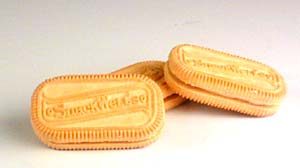
It’s surprisingly easy to unknowingly consume a massive amount of calories. Eating twelve SnackWell’s Crème Sandwich Cookies isn’t even that difficult. Just those cookies add up to 660 calories. That is more than a third of the recommended daily intake for many adults.
This isn’t about judging specific brands or products. I have two kids and we go to McDonald’s at least once a week. The real issue is simpler: in the US and most developed nations, accessing calories is effortless.
Consider a typical day for someone who is overworked, over-booked, and stressed. Convenience food often wins.
- Breakfast: Two Pop-Tarts.
- Lunch: A meal from Pizza Hut.
- Snack: SnackWell’s cookies and a cola.
- Dinner: McDonald’s.
- Evening: Potato chips while watching TV.
Without even trying, this day could easily hit 3,000, 4,000, or even 5,000 calories. The problem is the sheer volume of available food.
Your body is efficient at storing energy. When you have excess calories, your body converts them to fat for a rainy day. It only takes 3,500 excess calories to create one pound of new body fat. If you consume just 500 extra calories a day, you gain a pound a week. Since a single ice cream cone or a few cookies can provide those extra calories, gaining weight has become the path of least resistance. Food is just too easy to find.
How to Create a Calorie Deficit
Let’s say you are overweight and want to lose a few pounds. To lose one pound of fat, you need to burn off 3,500 calories. This means consuming 3,500 fewer calories than your body needs over time. There are different ways to create that gap.
Assume you weigh 150 pounds. Your body needs about 1,800 calories per day just to function at rest (150 pounds x 12). Here is how that math plays out:
-
Starvation mode: You lie in bed and eat nothing. You burn 1,800 calories but consume zero. You create an 1,800-calorie deficit daily. You would lose one pound of body weight approximately every two days. This is neither practical nor healthy for long-term sustainability.
-
Dieting: You eat less than you need. If you limit yourself to 1,500 calories a day instead of 1,800, you have a 300-calorie daily deficit. This results in losing one pound every 12 days (300 x 12 = 3,600).
-
Exercise: You eat 1,800 calories (your maintenance level) but jog two miles every day. Jogging burns about 200 calories. Over 18 days, you burn roughly one pound of body fat (200 x 18 = 3,600).
-
Extreme activity: You eat 2,500 calories but run 10 miles daily. You burn 1,800 at rest plus 1,000 running, totaling 2,800 burned. You are still 300 calories under your burn rate. You lose a pound every 12 days.
The bottom line is clear. You lose fat only when you consume fewer calories per day than your body needs. For every 3,500 calories your body pulls from its reserves, you lose one pound (0.45 kg). You can achieve this by restricting food, exercising, or both.
Most diets, from Weight Watchers to the grapefruit diet, operate on this same simple principle: lower your daily calorie intake. That is literally all they do.
Why Most Diets Fail
The main reason most diets don’t work long-term is that they aren’t sustainable. You gain weight because you eat more than you need. A diet creates a temporary deficit. When the diet ends and you return to “normal” eating, the weight comes back.
Let’s look at the numbers for a typical person. Assume you weigh 150 pounds and burn 1,800 calories at rest. Add 200 calories for daily movement like walking stairs or carrying groceries. Your total daily need is 2,000 calories.
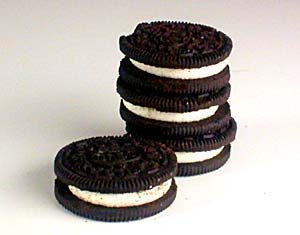
If you consume 2,050 calories a day, your body stores the extra 50 calories. It takes 70 days to accumulate 3,500 excess calories (3,500 / 50 = 70). So, you gain one pound every 70 days. If that small surplus continues for a year, you gain five pounds. This is actually how a large portion of the US population gains weight. Over-consuming by just a few calories adds up. Remember, one Oreo-type cookie contains about 50 calories. It is incredibly easy to slip into a surplus without noticing.
The challenge isn’t understanding the math. It’s navigating a world where the surplus is right there, waiting to be eaten. What happens when the motivation fades and the cookies are still on the counter?
The “Get Slim Miracle Diet” is not a meal plan. It is a punishment disguised as a strategy.
Imagine your new reality. Your entire daily intake consists of two cups of brown rice, a single can of Vienna sausages, and as many onions as you can stomach. That’s it. You are looking at roughly 1,000 calories. Then you add jogging two miles a day.
The math is brutal. You are burning 1,200 more calories than you consume. Every. Single. Day.
You will lose a pound every three days. Do the math. 3,500 calories equals one pound. Divide that by 1,200, and you see the pace. Keep this up for two months. You drop 20 pounds.
How does that feel? Hollow. Irritable. Obsessed with onions.
Then comes the end of the diet. The first thing you do is eat. A lot. You have been starving your body for sixty days. You crave calories. You gorge. Then you settle back into the eating patterns that got you here in the first place. The weight returns. Often, it comes back heavier than before.
This is the cycle. You lose weight because you restricted. You gain it back because you didn’t change your life. You just endured a temporary suffering.
Why Most Diets Fail Long Term
The problem isn’t willpower. It is sustainability.
A diet that requires Vienna sausages and onions is not a lifestyle. It is a short-term emergency protocol. Your body adapts to starvation. It slows your metabolism. It screams for energy. When you finally stop the starvation, your body clings to every calorie.
“What is needed instead is a sustainable diet — a food consumption and exercise plan — that lets you live a normal life and eat normal foods in the normal way.”
We need to stop looking for miracle fixes. We need systems that fit into our actual lives. Not idealized versions of ourselves who have time to boil brown rice for three hours. Real life. Busy, messy, human life.
Building a Sustainable Diet
So how do you break the cycle?
Start by abandoning the idea that you need to “fix” your body through deprivation. A sustainable diet is about addition, not subtraction.
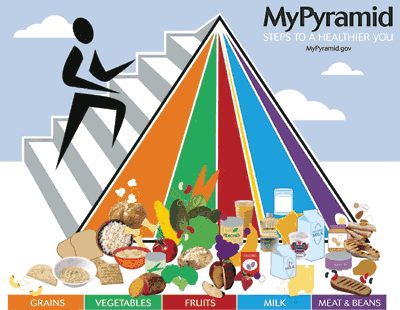
- Prioritize Whole Foods. Don’t count calories obsessively. Focus on nutrient density. Vegetables, lean proteins, healthy fats, complex carbohydrates. These foods keep you full. They stabilize blood sugar. They don’t make you crave onions.
- Move in Ways You Enjoy. Two miles of jogging might be torture for you. Maybe you hate it. Find movement you don’t resent. Dancing. Swimming. Walking while listening to a podcast. Consistency beats intensity.
- Eat Normal Food. Yes, you can eat pizza. Yes, you can eat cake. In moderation. If you ban all “bad” foods, you will binge when you break the rule. Flexibility prevents collapse.
- Listen to Your Body. Hunger is real. Fullness is real. Eat when you are hungry. Stop when you are satisfied, not stuffed. This is not a new diet. It is basic biology.
This isn’t about perfection. It
Counting the Calories You Actually Consume
You can’t manage what you don’t measure. If you want to stabilize your weight without the yo-yo effect, you need to look at the math. The landscape is littered with hidden calories. Exercise is hard work. It costs energy. But the first step to a sustainable diet is simple: start counting.
You need to know exactly how many calories you eat on a normal day. Not a “good” day. A normal one. You also need to build a mental database. When you pick up a snack, you should instinctively know its caloric value.
In the U.S., the FDA requires nutritional labels on packaged goods. Use them. Chain restaurants post this info online or in-store. If you’re eating out, look it up. Don’t guess.
Calculating Your Daily Limit
Once you know your intake, figure out your limit. You can use the rough “12 calories per pound” rule. Or, for better precision, look up specific metabolic formulas.
Pick your ideal weight. The number you want to hold long-term. Calculate how many calories you need daily to stay there.
Then, compare the two numbers.
It’s usually a shock. The gap between what you need and what you eat is where the extra pounds live. That’s the source of the weight gain.
Bridging the Gap
To close that gap, you have to align the numbers. You’ll quickly realize that 1,600 to 2,000 calories isn’t much. It’s a tight budget. You have to watch everything. Every sip. Every crumb. Stick to the limit.
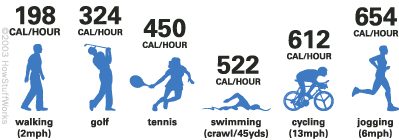
If you add exercise, you can raise that daily limit. Use an online calculator to see how many calories specific activities burn. Burning an extra 250 to 500 calories a day changes the equation significantly. It gives you a little more room to breathe.
Practical Strategies to Cut Calories
Reducing intake doesn’t have to mean starving. It means being strategic.
Track everything. Keep a journal. Carry an index card. Write down every calorie. The act of writing it down creates mindfulness. You start noticing patterns. You see the liquid calories. You see the late-night snacks.
Drop the myths. Stop believing in magic foods or detoxes. Focus on the basics.
Drink water. Eliminate calories from beverages. This is huge. Cola, orange juice, beer—they are liquid calories. They add up fast. And they don’t fill you up.
Consider this comparison:
* 10 oz of orange juice (300 ml): ~140 calories. Zero satiety. You’re still hungry.
* One whole orange: Fewer calories. You chew. Chewing has a psychological effect. It signals fullness. It fills your stomach.
The same logic applies to any drink with calories. They pass through you without curbing your appetite. Solid food does.
Cut the white sugar. This single change removes an entire category of high-calorie traps. No more cookies. No cake. No ice cream. No soda. No candy bars. When you refuse added sugar, you automatically avoid the bulk of snack foods.
Drop the fried foods. Potato chips. Cheese crisps. French fries. Onion rings. Donuts. Fritters. Fried chicken. Deep-fried items are calorie-dense. They pack a massive punch for their size. Combine cutting sugar and fried foods, and you’ve cleared out the junk aisles.
Swap density. High-density foods are small but heavy in calories. A cookie is one of them. One or two bites can be 50 to 100 calories. You barely register it.
Low-density foods take longer to eat but are lighter on calories. A banana is a classic example. It takes several bites to finish. It’s mostly water and fiber. You get 100 calories, but you feel full.
Choose the banana. It’s a small shift. One that adds up.
The Volume Trick: Eat More, Gain Less
Think about it. You could probably down a dozen Oreos without breaking a sweat. That’s 600 calories. Doable. Now picture trying to eat six bananas in one go. You’d feel like you’re going to burst. Same calorie count. Total disaster.
The difference? Density.
Bananas are low-density food. They take up space in your stomach but offer fewer calories per bite. That is the secret weapon for anyone trying to manage their weight without feeling like they are on a starvation diet. You want foods that fill you up. You want volume.
Look for low-density options that actually satisfy that hunger pang:
- Natural fruits and vegetables. If it grew in the ground or on a tree, it’s usually a good bet.
- Unsweetened cereals. Shredded wheat works. Sugary loops do not.
- Rice cakes. Plain ones.
- Unbuttered popcorn. Skip the movie theater butter.
- Whole-grain bread. The higher the fiber, the better.
- Brown rice. Better than white for keeping you full.
On the flip side, high-density foods are the enemy of satiety. These are foods packed with sugar and fat. Nuts, most meats, candy, cookies, crackers, potato chips, fried anything, cola, and beer. They pack a massive calorie punch into a tiny volume. You can eat a lot of them before your brain registers you are full. Avoid them if you want to stay in control.
Here is a behavioral hack that feels weird but works: wear form-fitting clothes.
Stop hiding in oversized sweats. Wear the jeans that hug your hips. The tight fabric acts as a constant, subliminal reminder of your goals. When you reach for a snack, you feel that waistband. It’s a physical check-in. It keeps you honest.
If you stick to these principles—eating low-density foods and moving more—you will lose fat. It is basic math. Consume fewer calories than you burn, and the pounds drop off. Keep it consistent, and the weight stays off.
Integrating Movement Into Your Day
Exercise isn’t just about burning calories; it’s about changing how you move through the world. It is a tool for weight control, yes, but also for sanity.
You need to integrate exercise into your daily routine. Don’t leave it for “someday.” Here is how to make it happen:
- Find what you can tolerate. You don’t need to love it. You just need to do it. Walk. Ride a stationary bike while watching your favorite show. Hit the gym at lunch. Do it for 30 minutes. Do it for 60. Just do it every day.
- Sneak in micro-exercises. Take the stairs instead of the elevator. Park at the back of the lot when you go shopping. These tiny choices add up over weeks.
- Keep weights at your desk. Keep a small set of dumbbells by your workstation. Lift them three or four times a day. Use the time while you are on a phone call or thinking through a problem.
- Find a partner. Exercise is lonely for some. Having someone to talk to makes it easier. A partner creates accountability. It turns a chore into a routine.
- Show up daily. Consistency beats intensity. It is easier to remember to exercise if it is part of your daily rhythm.
Online calculators can help you track how many calories you burn with different activities. Use them. Know your numbers. But don’t let the data paralyze you. Start moving. Start eating low-density foods. Wear the tight jeans. The rest will follow.
The Hard Truth About Calories
Let’s cut through the noise. You’ve seen the ads. They promise miracles. They sell you on the idea that weight loss is a trick, not a trade. But here is the reality check we rarely get from the supplement aisle or the tabloid front page.
The first lie is that calories aren’t created equal. They are. If you eat 4,000 calories of pure white sugar, your body registers that same energy load as if you ate 444 grams of fat. The source matters for nutrition. It matters for how you feel. It matters for long-term health. But for raw energy balance? A calorie is a calorie.
Then there is the low-fat trap. We’ve been conditioned to fear fat, so we swipe up fat-free yogurt and sugar-free cookies. Look at the label. You will often find that by stripping out the fat, manufacturers pump in sugar to make it taste like food. The result? A product with zero grams of fat but just as many, if not more, calories than its full-fat counterpart. You aren’t tricking your metabolism. You are just eating differently.
And please, put down the acupressure bracelet.
Why Passive Devices Don’t Work
There is a whole industry built on the hope of passive weight loss. Weight-loss belts. Detox soaps. Rings you wear on your fingers. It is a comforting fantasy. You buy the thing. You wear the thing. You expect the fat to leave without the pain of discipline.
It doesn’t work. You cannot out-source your energy expenditure. The only way to burn calories is to burn them. Period.
We are also sold on the idea of “enzyme-driven fat-burning cycles.” You’ll see ingredients like nettle seeds or apple pectin touted as secret weapons that ignite a 24-hour metabolic furnace. They don’t. These are marketing terms designed to make you feel like you have found a loophole. There is no loophole.
The Math of Impossibility
Let’s talk about speed. You’ve probably seen the headlines. Lose 54 pounds in 6 weeks without dieting or exercise!
Read that again.
To lose 54 pounds of actual fat in six weeks, you would need to drop 9 pounds every seven days. That is 1.3 pounds per day. One pound of fat equals 3,500 calories. So, 1.3 pounds is roughly 4,500 calories.
You would need to create a daily deficit of 4,500 calories.
How do you do that? You would have to eat absolutely nothing. And then you would have to run a marathon every single day for 42 days straight.
You can’t do that. No one can. If you see someone claiming they did this, they lost water weight. Or muscle. Or they are lying. The only other way to lose that much mass that quickly is through severe dehydration or amputation. Both are terrible options. The ads are lying to you because your desperation is their revenue model.
The Mental Game
So what is actually true?
You have to eat fewer calories than you burn. That’s it. It’s not sexy. It’s not complicated. But it is hard because the psychology of food is powerful.
Your body is a machine with a specific output. Some people burn more calories per day than others. Just as some people are taller or lose their hair faster, your metabolic rate is unique to you. You need to find your number. The number of calories your body burns in a day.
Then you consume fewer than that.
You can do this by eating less. Or by moving more. Or by doing both.
It is a mental game. You are fighting against billions of years of evolutionary biology that wants you to store fat for winter. You are fighting against an environment designed to make you buy things. There is no magic pill. There is no bracelet. There is just the math, and the will to stick to it.
If you want to dig deeper into how your body actually processes these numbers, there are resources that break down the science. How diet pills actually work. How fat cells function. How calories interact with your body. It helps to know the machinery if you want to operate it.
For those struggling with severe issues related to weight and eating disorders, resources like the National Association of Anorexia Nervosa and Associated Disorders (ANAD) offer support. Statistics from the National Institute of Diabetes and Digestive and Kidney Diseases (NIDDK) provide context on obesity and health.
The rules of the game are simple. The execution is the hard part. You know the rules now. What you do with them is up to you.