You might be scratching your head at the phrase “dragon mom.” It sounds fierce, sure. But the reality? It’s heavier. It’s about outliving your own child.
The award-winning short documentary Dragon Mom is currently touring festivals to explain it. Director Harrison Buck captures Laura Will and her six-year-old son, Alden Nicholson. They are a team. Their weapon? Skis.
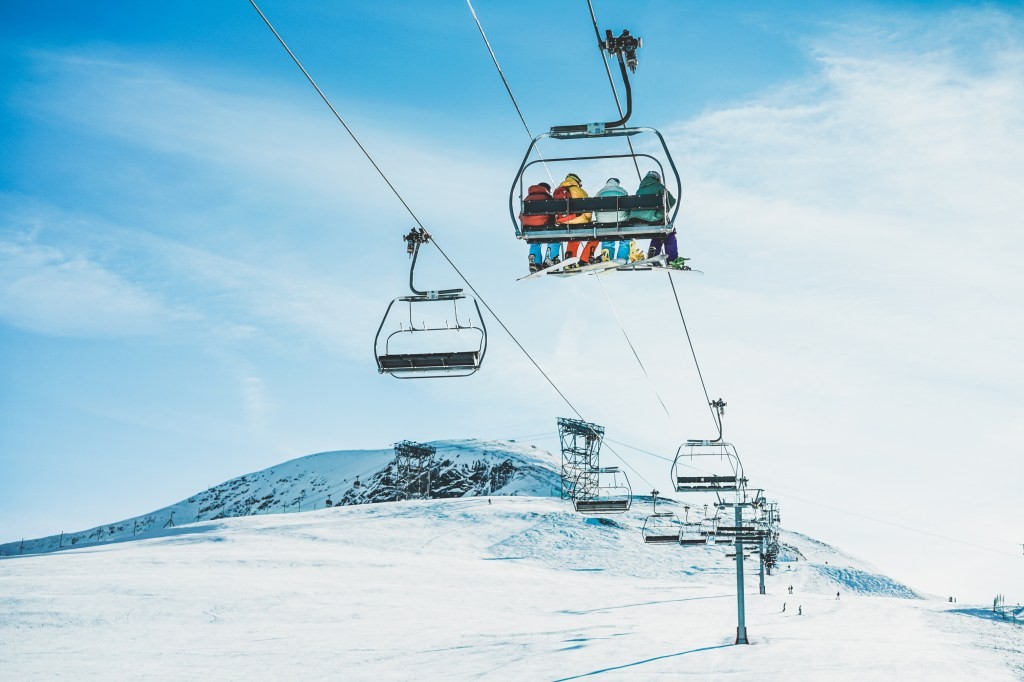
Alden has polymicrogyria. That is the medical term. In plain English: a severe brain malformation that limits how he moves and speaks. It’s life-limiting. So, Alden doesn’t use a normal ski. He uses a sit-ski. This adaptive gear lets someone with limited mobility hit the slopes independently. Will stands at the back of the apparatus. She guides his speed. She steers. Alden feels the wind. He gets the thrill. She provides the control.
This is the core of what makes this documentary stand out in the niche of disability advocacy documentaries. It moves past pity. It focuses on agency.
Where Did the ‘Dragon Mom’ Label Come From?
The name isn’t Buck’s invention. Emily Rapp coined it in a 2011 New York Times essay.
Rapp describes a “dragon mom” as a parent who is statistically expected to survive their child. Her son, Ronnie, had Tay-Sachs disease. He wouldn’t walk. He wouldn’t say “Mama.” The standard American dream of success—college, career, grandchildren—doesn’t apply here.
“Our goals are simple and terrible: to help our children live with minimal discomfort,” Rapp wrote. “We will see them into early graves.”
The essay argues that these parents require a new kind of ferocity. Not the “tiger mom” pushing for excellence. A dragon. Fierce. Loyal. Loving as hell.
Buck’s film, which took home the Jury Award for Best Short Documentary earlier this year at the Vero Beach Film Festival, leans into this definition. Will channels this ferocity into giving Alden the fullest life possible in the time they have.
How Skiing Changed Laura Will’s Mindset
Before skiing, Will was stuck in grief.
She told the Concord Bridge that being told your child has a severe disability kills a thousand dreams. You have to mourn them. You have to figure out how to build new ones from the rubble.
Skiing provided the bridge.
Watching Alden’s face light up in nature changed her. It shifted her away from viewing his life as a tragedy. It became about joy. About presence.
The film shows this beyond the slopes. You see Alden using a communication device. You see him navigating a playground with adaptive tools. You see him hanging out with his family. You see his dog. These aren’t just activities. They are proofs of life.
Why This Matters for Disability Representation
Will has a clear hope for this project.
She wants people to see differently. When Alden is just being a kid—laughing, playing, skiing—he isn’t the “disabled kid.” The diagnosis fades into the background. He is just a sweet boy. A boy who lives with a disability.
It’s a subtle shift. But it’s everything.
“All of a sudden, he’s not one person. He’s just this sweet boy who happens to live with a disability.”
The documentary forces the viewer to confront their own expectations. We want smooth narratives. We want triumphs that erase the struggle. This film refuses that. It shows the struggle. The sit-ski. The guiding hands. The medical terms.
But it also shows the speed. The sun. The love.
Is it fair to ask a six-year-old to be brave? Or is it just life?
Will is preparing to lose him. That is the “terrible” goal Rapp mentioned. But she isn’t just preparing for the loss. She is maximizing the now. Using the dragon energy to burn bright.
The film doesn’t end with a neat bow. The slopes don’t end. Neither does the uncertainty. You watch, you root for them, and you wonder how you’d handle the weight of loving something so fragile with such intensity.
Maybe that’s the point. You don’t resolve it. You just keep guiding them down the hill.