It looks wrong.
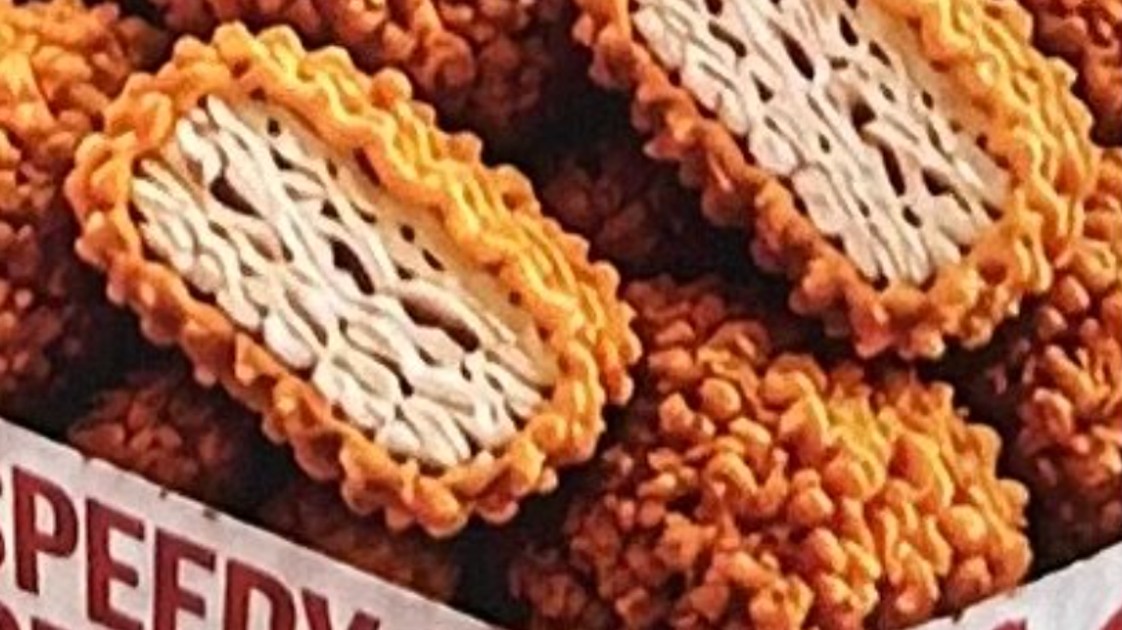
Not just “that cheese is a little shiny” wrong. We are talking about cartoonish blobs of sauce oozing from sandwiches. Bread that looks like a loofah. Items that seem to defy gravity, with liquids pooling in ways physics wouldn’t allow.
This is the current state of AI-generated food images. And for restaurant owners thinking it’s a cheap shortcut for menu design, the answer is a resounding no.
Customers are noticing. And they aren’t happy about it.
The Backlash Is Real
Take the case of a San Francisco coffee shop and bakery last month. Their storefront menu board featured drinks, pulled pork sandwiches, slaw, and croissants. The catch? The images were AI-generated.
The reaction was immediate and visceral. On Reddit, one post highlighting the “slop” garnered over 720 upvotes. Commenters didn’t just say it looked bad; they said it looked unsettling. One noted the slaw was scary. The bread? Disturbing.
The anger wasn’t just digital, either. As reported by the SF Gate, owners arrived on June 2 to find their awning graffitied with red paint. It wasn’t a prank. It was rage.
“Yum, slop.”
That sums it up.
Journalist Katie Rife recently shared an example of AI-generated chicken nuggets that looked less like a fast-food staple and more like chunks of goldendoodle meat. Video essayist Alexander Avila put it bluntly: even a blurry, terrible photo taken on a smartphone is infinitely more appetizing than this synthetic slop.
“We can all tell it’s AI,” Avila wrote. “It looks disgusting. And it communicates a deep insecurity.”
The Trust Trap
Why do restaurants do it? Brad A. Johnson, a former critic turned hospitality photographer in California, gets it. Hiring a commercial photographer costs money. Small business owners are strapped for cash and time.
But Johnson warns this is a strategic error. When you use AI, you create a visual bait-and-switch.
“Creating and managing proper expectations is critical,” Johnson says. “Ugly food can be beautiful. If thechef is not an artist, that’s okay, but they should embrace that rathercreate a visual bait and switch.”
The risk is twofold. First, the customer receives a dish that looks nothing like the image. Second, trust evaporates before the first bite. It’s like scrolling through Yelp and seeing a polished promo shot next to a customer’s photo of a sad, flat burger. The gap is often shocking.
Lindsay Kreighbaum, a food photographer and director, goes further. She calls it false advertising.
“If you’re generating images of your food andnot using your actual product, how areyou establishing trust?” Kreighbaum asks. The result isn’t a picture of your food. It’s an algorithm scraping the internet, stitching together textures that look rubbery and soulless.
“Textures are not realistic,” she says. “It’s not appetizing!”
The Legal Gray Area
Is it illegal? Technically, maybe. But practically, probably not.
Andrea D’Agosto, another food photographer, points out that while Subway gets sued for adding extra meat to sandwich photos that doesn’t come in the box, local restaurants rarely face the Federal Trade Commission. The FTC isn’t knocking on the doors of mom-and-pop shops for bad AI art.
However, D’Agosto notes there are truths in advertising laws. Food stylists can adjust lighting and arrange garnishes, but they must show the actual product. AI doesn’t care about ounces or truth. It cares about pixels.
“You might not get fined,” D’Agosto says, “but you will lose customers over time.”
The Immigrant Reality
Michael Russell, chief restaurant critic for The Oregonian, sees the trend in Portland’s food cart scene. Many operators there are recent immigrants who didn’t grow up with commercial photography budgets.
“You can’t really fault these small business…for leaning on free, easy-to-use technology,” Russell says. Even if the Colombian pizza or Kyrgyz dumpling images look like they fell into the uncanny valley, the intent is usually to brighten up a menu, not deceive.
But intent doesn’t stop the eye from squinting at the screen.
The Craving for Real
Jenn Tanaka, a food writer in Southern California, sees this as part of a wider cultural rejection of AI. From booed commencement speakers to botched ad campaigns, people are vocal about their disdain for the technology.
“It’s a lazy move,” Tanaka says. “AI images are like junk food. Available, but is it good for us?”
Food photography has its trends. We’ve had the minimalist plating, the overhead flat-lays, the rustic wood boards. Now, there is the algorithmic gloss. Tanaka thinks consumers will soon gravitate toward the messy, the real, and the imperfect.
“People want something that’s a little messy,” D’Agosto adds. “They want behind-the-scenes photos to prove you’re not partaking in the slop.”
An iPhone 15 photo taken by the owner in a dimly lit kitchen might win you back the trust lost to a generated nugget.
It’s not about perfection. It’s about proof. Proof that a human hand made it. Proof that it exists in the real world.
Because right now, the AI version just looks like something you’d feed a robot. And people aren’t buying it.