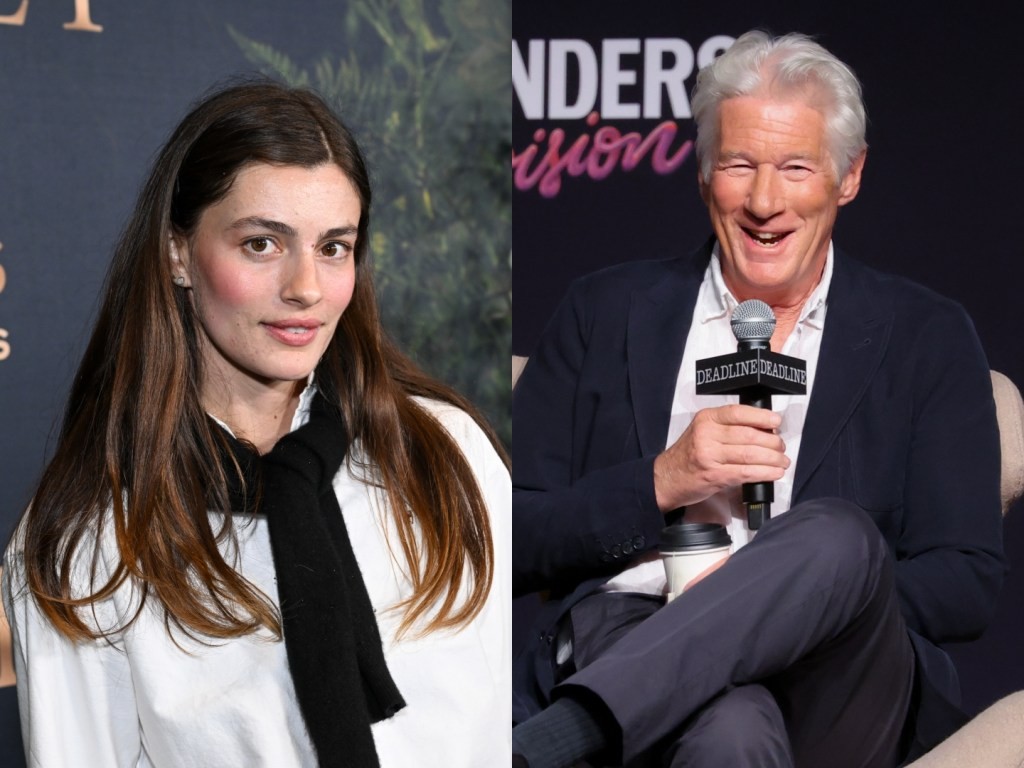
It’s 2026. We keep telling them to stop. They keep filming anyway.
The latest provocation is Asymmetry, pairing a septuagenarian Richard Gere with a 20-something Diana Silvers. A famous author falls for his assistant. Instant outrage. It sparked the same conversation we’ve had for decades about age-gap romances in cinema. Not just the ones that cross legal lines. But all of them.
This isn’t new. Audrey Hepburn starred in Sabrina back in the 1950s. We’re still here. From Asymmetry to the controversial 2024 release Miller’s Girl, Hollywood loves the power dynamic. Or the “taboo” angle. Often involving children. Or people treated as children.
Let’s look at the ones that got under our skin.
The Recent Headlines
‘Asymmetry’
Richard Gere stars as the author. Diana Silvers plays the assistant. The adaptation of Lisa Halliday’s book puts them in a secret, intergenerational affair. It’s causing quite the stir already. The photos alone raised eyebrows.
‘Miller’s Girl’
Martin Freeman plays a creative writing professor. Jenna Ortega plays an 18-year-old student. The age gap is wide. The power imbalance is wider. He has tenure. She has a grade. It felt deeply inappropriate from frame one.
‘Poison Ivy’
Drew Barrymore in 1992. A psychopath seducing a grown man played by Tom Skerritt into a web involving her best friend. They have sex. Repeatedly. Ivy is a literal child in these scenes. Darryl is a man. The movie calls him the groomer but frames her as the villain? It doesn’t compute.
‘The Crush’
Alicia Silverstone’s breakout. A girl obsessed with a married journalist in his 30s. He rejects her initially. Then he kisses back? When the power is so skewed it becomes predation. Very uncomfortable.
‘Twilight’
Edward is 104. Bella is a child. He chooses high school over a century of existence to chase her. You tell us this is love? It’s disturbing when you look past the sparkle.
The Classics That Didn’t Age Well
‘An Education’
16-year-old Jenny meets a man twice her age in the 60s. The memoir calls it a coming-of-age story. The reality is a grooming narrative. It gave people the ick. Rightfully so.
‘Entrapment’
Catherine Zeta-Jones is thirty. Sean Connery is near seventy. This wasn’t a pure romance but the attraction felt forced. It made audiences squirm. The chemistry felt like a math error.
‘Notes on a Scandal’
Can we skip the teacher-student stuff? Sheba (Cate Blanchett) is a teacher in her 30s. Steven is 15. It is illegal. It is disturbing. The age gap isn’t a plot twist; it’s a crime scene.
‘The Reader’
Kate Winslet won an Oscar. The role involves a teenage boy and an older woman, a Nazi prison guard. Their affair is central to the plot. It reconnects decades later. It remains deeply troubling to parse.
The Weird & The Wonky
‘Seeking a Friend for theEnd of the World’
Steve Carell and Keira Knightley. A quirky apocalypse rom-com. Their bond is nice. But the circumstances make the romance feel off. Too many variables for a clean ‘ship.
‘Labyrinth’
We love the movie. We love David Bowie’s Goblin King. Why is an ancient, immortal king obsessed with a teenager who just moved in? The logic holds zero water. We still question it.
‘Tadpole’
A teen boy pursues two women in their 40s and 50s. They reciprocate. It feels less like a movie and more like a nightmare sequence. Just… too much.
‘Big’
Tom Hanks is inside the body of an adult named Josh. Outside, he looks like Elizabeth Perkins’s age-mate. Inside? He’s 12. She sleeps with him. Knowing this twist makes it deeply uncomfortable.
‘Sabrina’
A classic. Humphrey Bogart and Audrey Hepborn. A 30-year age gap. Fans rubbed it wrong in 2026 just as they did in 2000. Time doesn’t fix the imbalance.
‘Breezy’
- Kay Lenz is a young hippie. William Holden is an older man. She gets picked up for sex. It turns into a relationship. Controversial then. Still controversial.
‘Harold and Maude’
Harold is young. Maude is 79. Their connection is famous for a reason. But looking at it now? It’s a lot to unpack. The intensity remains.
Why do we keep going back to these tropes?
We don’t have to. We just don’t. Yet the red carpets roll. The cameras click. And the conversation repeats.
The problem isn’t just the math. It’s the narrative framing that turns powerlessness into romance.