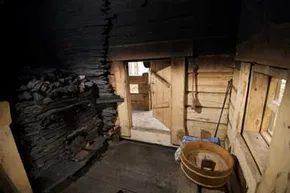
When you enter the sauna, your feeling changes. When you step inside, the heat hits you in the face. Very intense. The temperature is about 176-degree Fahrenheit or about 80 degrees Celsius. If you’re fully clothed, you’ll start sweating even before you sit down. This is why the tradition of nudity exists. It’s not just about humility. It’s all about thermal efficiency.
The low humidity allows it to withstand these scorching temperatures. The air stays dry, so your skin can withstand the heat. However, the real star of the sauna is the wood.
The science behind wooden interiors
There is a reason that cedar and spruce are standard materials. Metal plates can burn the skin. The plastic melts. Although the air burns, the wood remains relatively cool. It still needs a hit. The wood is very durable even in these extreme conditions.
Wood has amazing properties like low thermal conductivity. It absorbs steam. Stores heat. A pleasant fragrance spreads every time you use it. Some saunas have tiles under the wood to regulate humidity and lock in heat. The result is a room that seems to breathe.
From smokehouses to modern ovens
The history of saunas is ancient. The oldest form is the subsauna. Think of it like a cabin in the woods with no windows or chimney. There is no craftsmanship on display here. Just logs and a campfire.
Smoke filled the room. It seeped through the cracks in the ceiling. I can see it. It takes a whole day to heat up this type of sauna. Currently, only purists advocate using this approach. This is more of a ritual than a convenience.
Modern saunas keep the core concept, but remove the smoke. They use small stoves called kiuas. The stove can be an electric stove, a gas stove or a wood stove. The purpose is the same. It’s about heating a pile of rocks. Some kiuass provide continuous heat. Others heat the stone once, allowing it to release heat long after the original fire has died down.
Choose the right stone
It is not just a stone structure. We need stones that can withstand extreme temperature changes without cracking. Exploding rocks inside the hut is a bad idea.
Raw quarry stone is the best choice. Peridotite is popular with Finns for a reason. Basalt and amphibole are also common. These stones can withstand high temperatures. they retain it. They release it slowly.
“The wood stays relatively cool even at high temperatures and is very durable.”
Now that the room is warm and the stone is ready, you may notice a ladle and bucket in the corner. What are they doing? This is another question. Now just breathe. The temperature rises.