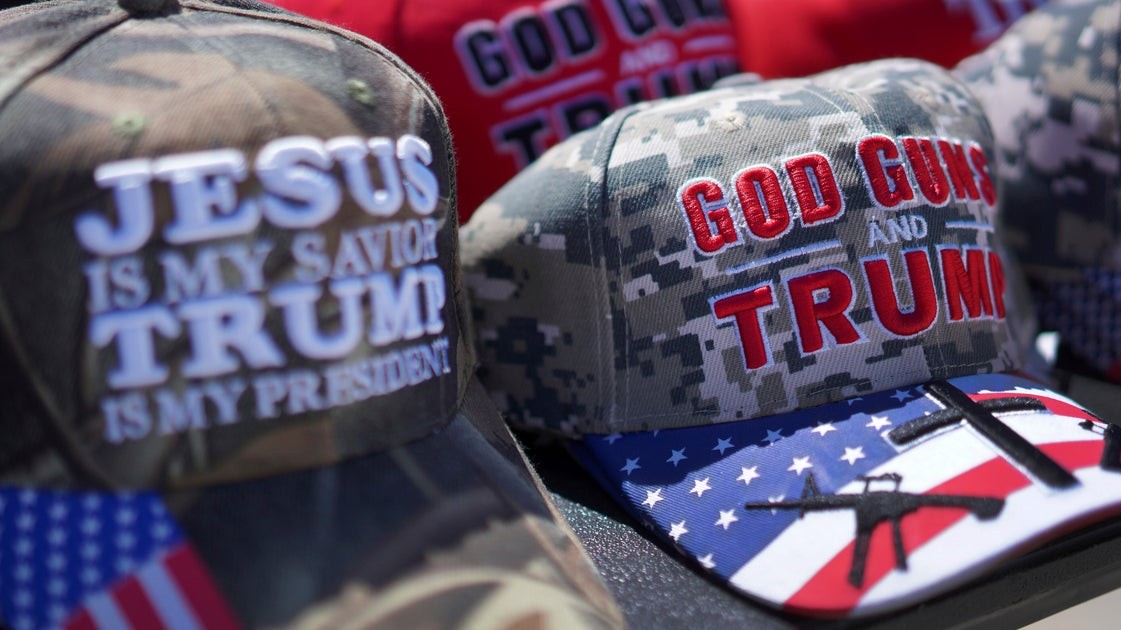
For many Americans, faith was once a deeply personal matter—a source of community and conviction, separate from political allegiance. However, over the last decade, that line has blurred, with religious leaders increasingly endorsing candidates from the pulpit and patriotic anthems blending with worship music. As a result, congregations have fractured over issues ranging from public health to immigration, race, and the policing of cultural morality.
This shift has led to a quiet exodus, as believers choose to walk away when their convictions clash with the growing political entanglement of their faith. One commenter put it bluntly: “I grew up Catholic but left the church because of the toxic views and opinions on ‘morality.’ If most Christians were like you, I reckon I’d go back.”
The core issue isn’t simply disagreement; it’s the feeling that what was once a moral home has become a battleground. Former followers of “MAGA Christianity” describe experiences of being part of these communities and why they ultimately made the difficult decision to step away.
The Roots of Entanglement
Anna Rollins, author of “Famished,” recalls a childhood steeped in rules and expectations. “Faith was the most important part of my life,” she says. “Being a good Christian meant following a lot of written and unwritten rules.” Growing up Southern Baptist, Rollins observed how Christianity was presented as inseparable from Republican identity, with patriotic symbols woven into church life. “Faith and freedom were often talked about in the same breath,” she explains.
But this intersection isn’t always benign. Deirdre Sugiuchi, author of the upcoming memoir “Unreformed,” reveals a darker edge. She describes “MAGA Christianity” as a cult, recalling her experience in a white evangelical reform school where control and abuse were justified in the name of Jesus. “Leaving isn’t easy; it can take everything to break free,” she says, arguing that many believers are effectively brainwashed and unaware of the forces shaping them.
The Rise of Political Allegiance
The merging of politics and faith has created a troubling dynamic where obedience to authority and nationalism often outweigh traditional Christian values of love, service, and community. Critics argue that this shift subordinates Jesus’ teachings about caring for the poor and welcoming strangers to a political-tribal agenda. Amy Hawk, author of “The Judas Effect,” recounts how Trump’s treatment of women clashed with her ministry work, ultimately pushing her family out of the church.
This trend isn’t new, but it has accelerated in recent years. Cara Meredith, author of “Church Camp,” explains that for many, identifying as Christian meant voting Republican, with no other option considered. This framing reduces faith to a political allegiance, rather than a spiritual conviction.
The Breaking Point
For many, the breaking point came from a growing dissonance between their faith and the political messaging they encountered. Rollins recalls questioning her church’s nationalism after reading the Bible. “Reading Scripture made me see that Christianity was not about aligning oneself with a nation-state,” she says.
Sugiuchi’s turning point came after years of trauma rooted in white evangelical extremism. At 15, she was sent to Escuela Caribe, an evangelical reform school, for failing to be “subservient.” She and her peers endured unimaginable oppression justified in the name of Jesus. Realizing her silence contributed to continued harm, she helped shut the school down.
Tia Levings, author of “A Well-Trained Wife,” describes this as the overlap between authoritarian Christianity and Christian nationalism—a malformation of true faith. She argues that many churches have failed to protect their congregations from nationalist influence, and that authoritarian parenting has shaped family life for decades. The result is a fundamental change in what it means to be Christian in America.
The Consequences of Leaving
Leaving isn’t easy. Meredith reflects on the loss of community, praying friends, and shared milestones. “When that place, and those people, are gone, there’s a deep void that happens in your soul, your calendar, and your text messages,” she says.
Some redefine their faith, keeping what feels authentic while shedding performative aspects. Others seek new communities outside politicized churches. Rollins still identifies as Christian but has deconstructed the prosperity gospel, perfectionism, white supremacy, and hyper-individualism she once embraced.
Hawk observes that many evangelicals don’t follow Jesus as closely as they claim, instead being indoctrinated into the Republican Party. For those who leave, it’s not a rejection of Jesus but a reclaiming of a faith that feels morally and spiritually coherent.
“The exit costs are high. You lose the community, the support, and the sense of belonging. But for many, staying would mean betraying their own values.”
The exodus from MAGA Christianity is a growing phenomenon driven by moral dissonance, political trauma, and a desire for authentic faith. Those who leave often do so at great personal cost, but for them, it’s a necessary step toward living a life aligned with their convictions.