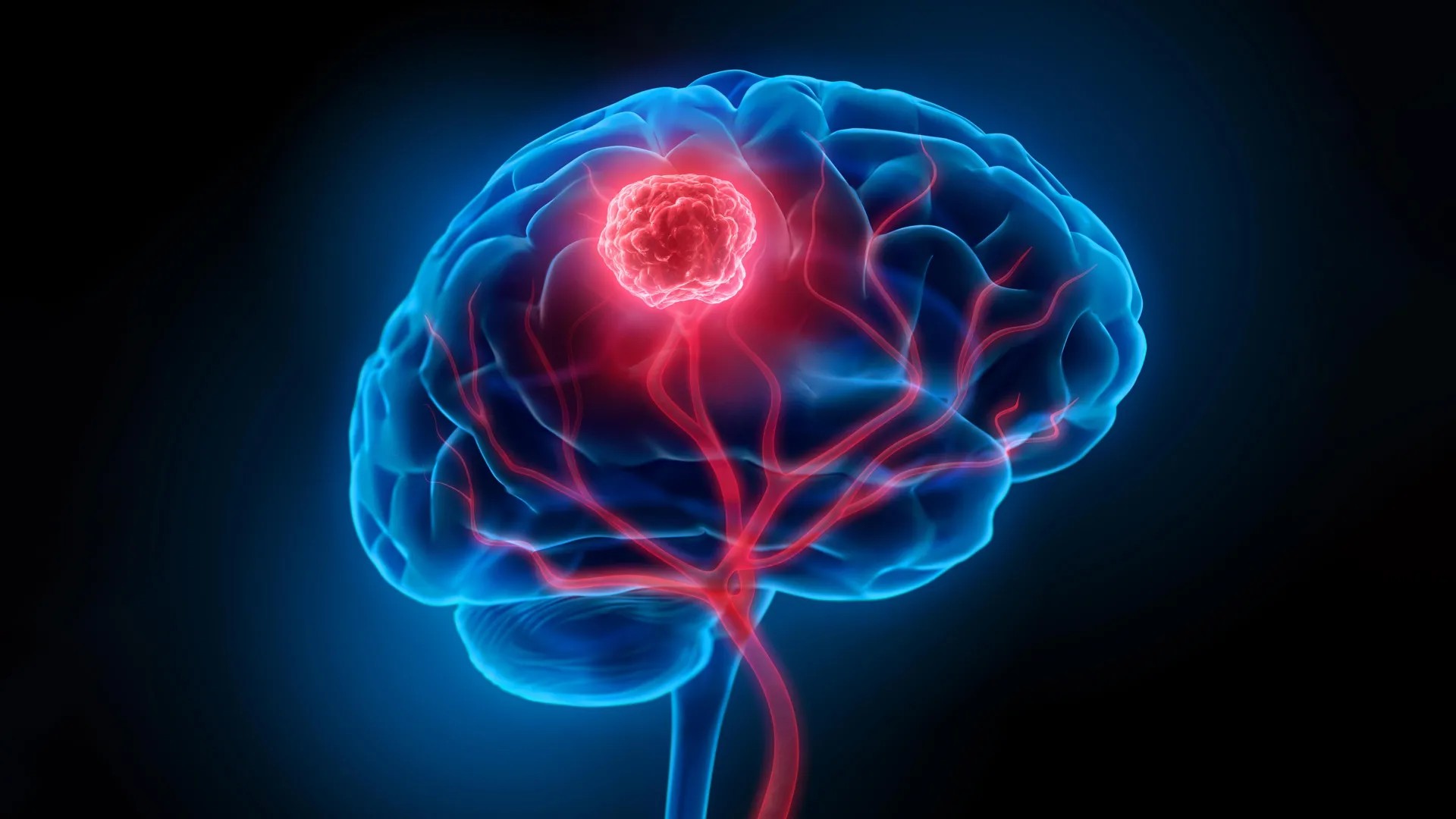
Scientists have discovered that brain tumors may begin forming years before they become visible on scans, originating from seemingly normal brain cells. The research, published in Science, reveals that the first genetic mutations driving aggressive brain cancers can quietly spread within healthy tissue long before a detectable tumor mass emerges. This finding fundamentally changes how scientists understand the disease and opens new avenues for earlier diagnosis and more effective treatments.
The Cellular Roots of Glioma
A joint research team from KAIST and Yonsei University Severance Hospital traced IDH-mutant glioma – a deadly brain cancer – back to Glial Progenitor Cells (GPCs). These cells, normally responsible for brain development, can harbor the critical IDH mutation and begin proliferating silently within the cerebral cortex.
Researchers examined surgically removed tumors alongside adjacent healthy brain tissue, using spatial transcriptomics to map gene activity. The results confirmed that mutated GPCs were present in regions that appeared completely normal. This is a key finding: brain tumors don’t just appear ; they evolve over time from within existing brain structures.
A Gradual Process Confirmed in Animals
To validate their findings, the team replicated the process in mice. Introducing the same genetic mutation into GPCs triggered tumor development, mirroring the progression seen in human patients. This confirms that the early cellular changes are not merely a correlation but a direct cause of the cancer.
Different Origins for Different Brain Cancers
This research builds on previous work identifying the origins of another aggressive brain cancer, IDH wildtype glioblastoma, which arises from neural stem cells in a different brain region. The new study clarifies that brain cancers aren’t monolithic; they follow distinct biological paths based on their genetic subtype.
This is critical because it means treatment strategies must be tailored to the specific cellular origin of each tumor.
Implications for Diagnosis and Treatment
Professor Seok-Gu Kang explains that current diagnostic approaches may be too late. The focus must shift to identifying and targeting these early-mutated cells before they form a visible mass. Sovagen Co., Ltd., a KAIST startup, is already developing an RNA-based drug to slow or halt the progression of IDH-mutant tumors.
Severance Hospital is also pursuing new technologies to detect and control these early mutant cells through collaborative research projects. This research underscores the importance of understanding the entire cancer process, not just its late stages.
A Neurosurgeon’s Question Drives Discovery
Dr. Jung Won Park, the study’s lead author, emphasized the collaboration between basic science and clinical expertise. The research was sparked by a simple question he repeatedly asked while treating patients: “Where does this tumor originate?” This question led to a breakthrough that could reshape brain cancer treatment for years to come.
The discovery that brain tumors develop from hidden, early mutations reinforces the need for proactive, targeted interventions. By understanding the cellular origins of these cancers, researchers are poised to develop more effective diagnostics and therapies, ultimately improving patient outcomes.