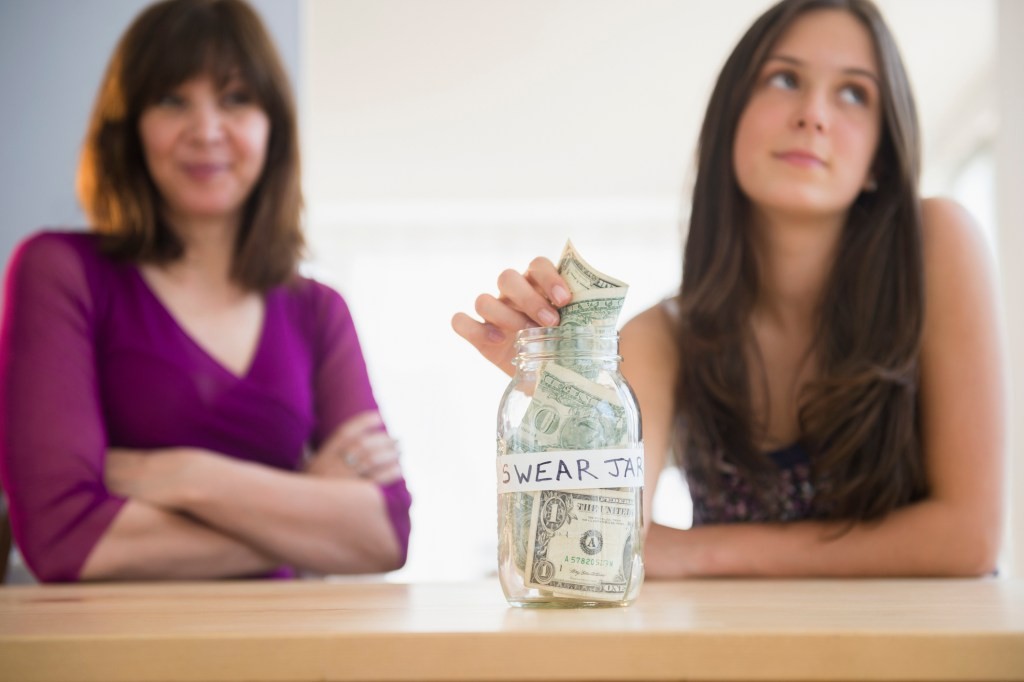
The old-fashioned notion of scrubbing a child’s mouth with soap for bad language is fading fast, according to a new national poll. More than half of parents now consider swearing at least sometimes acceptable for their kids, a significant shift in attitudes.
Changing Attitudes Toward Profanity
A University of Michigan study reveals that only 47% of parents believe children should never swear. The remaining 53% think it’s okay in certain situations (35%) or depends on the specific word used (12%). This reflects a broader trend towards more casual language norms, even within families. Just 6% of parents see swearing as “no big deal,” indicating most still recognize some boundaries.
How Common Is Swearing Among Kids?
The poll also examined how frequently children actually swear. The majority of parents (76%) report their kids swear rarely or never, but a substantial 24% say their children do it occasionally or frequently. This behavior is far more common among teenagers (37%) than younger children (14%).
Parents identify several reasons behind this: habit (41%), peer pressure (37%), attempting humor (36%), seeking attention (21%), or simply because “that’s how kids talk now” (27%). The rise in swearing aligns with broader cultural changes, where casual language is increasingly prevalent.
Parents Take Responsibility—and Blame Others
Interestingly, most parents (58%) admit they may contribute to their child’s swearing. Yet, they also point to external influences: classmates and the media. This suggests a recognition that language habits are learned from multiple sources, not just at home.
How Parents Respond to Swearing
Parents who object to swearing cite religious beliefs, bad manners, or context-inappropriate behavior as their main concerns. Strategies for limiting exposure include modeling good language (57%), restricting media (39%), asking others to refrain from swearing around the child (28%), or discouraging friendships with foul-mouthed peers (20%).
When swearing occurs, most parents tell their child to stop (41%) or explain why it’s unacceptable (38%). A notable 14% ignore it, and only 6% resort to punishment. Parents of teens are more likely to ignore swearing than those of younger children (21% vs. 8%).
The Rise of Casual Language
Experts like Timothy Jay, a scholar of swearing, point to the increasing normalization of profanity in modern culture. He attributes this partly to social media, where curse words appear at a much higher rate than in spoken language. Studies have shown that on X (formerly Twitter), nearly 8% of posts contain swear words.
However, swearing isn’t necessarily harmful. Research suggests it can provide emotional release, boost confidence, and even increase pain tolerance. As Jay puts it, “Swear words are like tools: we use them for personal or social gain.”
The poll’s co-director, Sarah Clark, acknowledges that parents are navigating a complex landscape. The key is to set clear expectations and respond consistently, rather than relying on harsh punishments.
Ultimately, parents must decide what level of swearing is acceptable for their family and enforce those boundaries fairly. The debate over profanity is ongoing, but the trend clearly indicates that attitudes are becoming more relaxed.